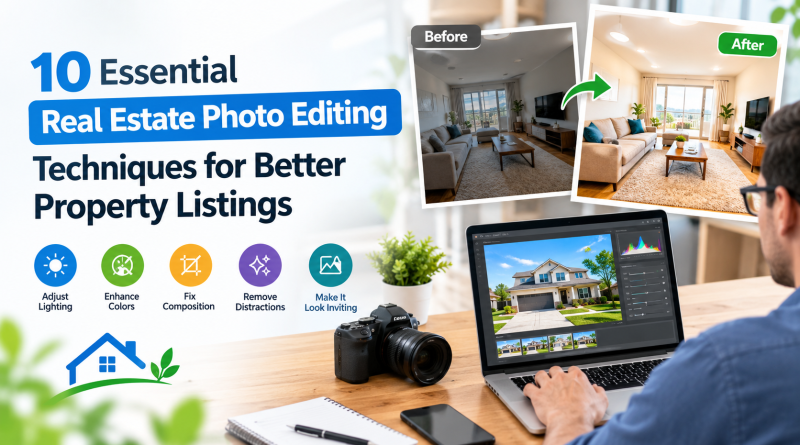
10 Essential Real Estate Photo Editing Techniques for Better Property Listings
Real estate photography is an important part of property marketing, but capturing a good photograph is only the beginning. Even photographs taken with professional cameras can require post-production to correct exposure, colors, perspective, reflections, and other visual issues.
Real estate photo editing techniques help transform raw property photographs into polished listing images that are clear, balanced, and suitable for online marketing.
Whether you are a real estate photographer, property agent, broker, developer, or marketing professional, understanding the most useful editing techniques can help you create better property listings and maintain a consistent visual standard.
Below are 10 essential real estate photo editing techniques that can improve property photographs while keeping them realistic and professional.
1. Exposure Correction
Exposure problems are common in property photography.
A room can contain both very bright and very dark areas. For example, sunlight coming through a large window may be much brighter than the furniture and walls inside the room.
If the exposure is not balanced, important details can disappear in shadows or highlights.
Exposure correction helps adjust the overall brightness of an image without making the property appear unnatural.
Professional editors may carefully adjust:
- Highlights
- Shadows
- Brightness
- Contrast
- Whites
- Blacks
The objective is to reveal useful details throughout the photograph while maintaining a realistic appearance.
This technique is particularly useful for living rooms, bedrooms, kitchens, offices, and other interior spaces.
2. HDR Image Blending
High Dynamic Range, commonly known as HDR, is one of the most useful techniques in real estate photography.
Photographers may capture several exposures of the same scene. Each exposure contains different levels of brightness and detail.
An editing professional can combine these exposures into one balanced photograph.
HDR blending can help preserve details in:
- Bright windows
- Dark furniture
- Walls
- Ceilings
- Flooring
- Outdoor views
The key to effective HDR editing is moderation. Excessive HDR processing can create unrealistic colors, halos, and exaggerated contrast.
A professionally blended image should look natural while providing sufficient detail throughout the property.
3. White Balance and Color Correction
Lighting conditions can significantly affect the colors in a property photograph.
Artificial lights may produce warm yellow tones, while daylight can introduce cooler tones. Mixed lighting can make different parts of the same room appear to have different color temperatures.
White balance correction helps create more accurate and consistent colors.
Editors can adjust the overall color temperature and tint so that:
- White walls look neutral
- Flooring retains its natural appearance
- Furniture colors remain accurate
- Interior lighting looks balanced
- Different photographs have a consistent appearance
Color correction is especially important when multiple photographs from the same property are displayed together.
4. Perspective Correction
Real estate photographers frequently use wide-angle lenses to capture more of an interior space.
However, wide-angle photography can sometimes produce perspective distortion. Vertical lines may appear to lean, and walls or doors can look slightly distorted.
Perspective correction helps straighten architectural elements and create a more balanced composition.
Editors may correct:
- Vertical walls
- Door frames
- Windows
- Cabinets
- Building edges
- Architectural lines
This technique is particularly valuable for professional property photography because straight architectural lines can make an image look cleaner and more polished.
5. Lens Distortion Correction
Different camera lenses can produce different forms of distortion.
Wide-angle lenses are useful for capturing larger areas, but they may cause objects near the edges of the frame to appear stretched or curved.
Lens correction tools can help reduce these visual problems.
Correcting lens distortion can improve the appearance of:
- Rooms
- Hallways
- Kitchens
- Bathrooms
- Building exteriors
- Architectural features
The goal is not to make a room appear significantly larger than it really is. Instead, correction should create a more accurate representation of the photographed space.
6. Sky Replacement and Sky Enhancement
Exterior property photographs depend heavily on weather and lighting conditions.
A photograph taken under a flat or overcast sky may not provide the visual impact that a property deserves. Sky replacement or enhancement can sometimes be used to create a more appealing exterior image.
This technique can be used for:
- Residential properties
- Commercial buildings
- Vacation properties
- Apartment complexes
- Luxury homes
A successful sky replacement requires careful masking around rooflines, trees, balconies, and other architectural details.
The replacement sky should also match the lighting direction and overall conditions of the original photograph.
Real estate editing should remain honest and should not create a misleading representation of the property or its surroundings.
7. Object Removal
Unwanted objects can distract viewers from important property features.
During a photography session, temporary items or visual distractions may accidentally appear in photographs.
Examples include:
- Small pieces of equipment
- Temporary signs
- Cables
- Minor clutter
- Unwanted reflections
- Distracting background objects
Object removal can clean up these distractions and create a more focused image.
However, editors should distinguish between removing temporary distractions and digitally altering important characteristics of a property.
The purpose of professional editing is to improve presentation, not to misrepresent the property.
8. Window View Enhancement
Windows are one of the most difficult elements to photograph in interiors.
The outside view can be significantly brighter than the room itself. As a result, the window may appear completely white or overexposed in a single exposure.
Window enhancement can help balance the exterior view with the interior lighting.
Editors may combine exposure information or carefully adjust highlights to reveal more detail outside the window while maintaining a properly exposed interior.
This technique is especially useful for properties featuring:
- City views
- Gardens
- Pools
- Landscapes
- Beaches
- Mountain views
When properly performed, window enhancement can improve the overall balance of an interior photograph.
9. Image Retouching and Detail Enhancement
After correcting exposure and color, photographs may still require careful retouching.
Detail enhancement can improve the overall presentation of a photograph without changing the essential characteristics of the property.
Professional editors may work on:
- Minor visual distractions
- Small imperfections
- Image clarity
- Sharpness
- Local contrast
- Fine details
Sharpening should be applied carefully. Excessive sharpening can create unnatural edges and visible artifacts.
The best results usually come from subtle adjustments that improve clarity while keeping the photograph natural.
10. Consistent Editing Across a Property Set
Editing one photograph correctly is important, but consistency across an entire property listing is equally important.
A typical real estate photography project may include:
- Exterior photographs
- Living rooms
- Bedrooms
- Kitchens
- Bathrooms
- Hallways
- Gardens
- Amenities
- Building photographs
If each image has a different brightness, color temperature, contrast level, or editing style, the listing can look inconsistent.
Editors can establish a consistent visual approach across the complete image set.
For example, photographs from the same property can maintain similar:
- Color balance
- Exposure
- Contrast
- Saturation
- Perspective
- Sharpness
This creates a more professional presentation when potential buyers move from one photograph to another.
Choosing the Right Editing Workflow
A reliable editing workflow can make a significant difference when handling real estate photography projects.
A typical workflow may begin with image selection and organization. Photographs are then reviewed for exposure, composition, color, and technical issues.
The editing process can include:
- Selecting the best photographs
- Correcting exposure
- Adjusting white balance
- Blending HDR exposures when required
- Correcting perspective
- Removing appropriate distractions
- Enhancing windows and skies when necessary
- Applying color adjustments
- Sharpening and final optimization
- Performing quality control
Following a consistent workflow can reduce errors and help maintain the same standard across multiple property projects.
Why Photographers Should Consider Professional Editing
Real estate photographers often have demanding schedules.
After completing a photography session, they may need to organize hundreds of files, communicate with clients, manage bookings, and prepare photographs for delivery.
Post-production can become one of the most time-consuming parts of the workflow.
Working with professional real estate photo editing services can allow photographers to outsource repetitive post-production tasks while concentrating on photography, client relationships, and business development.
A professional editing partner can also help photographers maintain consistent results when handling larger volumes of property images.
Real Estate Editing for Different Property Types
Different properties may require different editing approaches.
Residential Homes
Residential listings may benefit from exposure correction, color balancing, perspective correction, and subtle retouching.
Luxury Properties
Luxury properties often require highly detailed editing to showcase architecture, interiors, landscaping, and premium finishes.
Commercial Properties
Commercial buildings may require careful perspective correction and consistent exterior editing.
Apartments and Condominiums
Apartment photography can benefit from balanced interior lighting, window enhancement, and consistent color correction.
Vacation Properties
Vacation rentals often rely heavily on attractive photographs. Exterior enhancement, interior correction, and careful color adjustments can help create a strong presentation.
The editing approach should always be adapted to the property and intended marketing purpose.
Realistic Editing Is Better Than Excessive Editing
One of the most important principles of real estate photo editing is maintaining realism.
Over-editing can make photographs look artificial.
For example, excessive:
- Saturation
- HDR effects
- Clarity
- Sky replacement
- Sharpening
- Brightness
can reduce the professional quality of an image.
The best editing usually improves the photograph while preserving the property’s authentic appearance.
Potential buyers should be able to recognize the property when they visit it in person.
How Better Editing Supports Property Marketing
Real estate photographs may appear in many places, including property websites, listing platforms, social media, brochures, email campaigns, and digital advertisements.
Because these photographs represent the property across multiple marketing channels, quality and consistency matter.
Well-edited images can help create a professional visual presentation and make property marketing materials more cohesive.
For photographers and real estate businesses managing multiple listings, having a repeatable editing process can also improve productivity.
Final Thoughts
Real estate photo editing involves much more than simply increasing brightness or adding color.
Techniques such as HDR blending, exposure correction, perspective correction, lens correction, color balancing, window enhancement, object removal, and careful retouching can significantly improve the presentation of property photographs.
The most effective editing approach is one that combines technical accuracy with visual restraint.
When photographs remain realistic, consistent, and professionally presented, they can become a stronger part of a property’s overall marketing strategy.
For real estate photographers, agents, and property marketing teams, developing an efficient editing workflow can also save valuable time and make it easier to manage a growing number of property listings.
By applying the right real estate photo editing techniques to every project, businesses can produce polished property imagery while maintaining a consistent and trustworthy visual presentation.