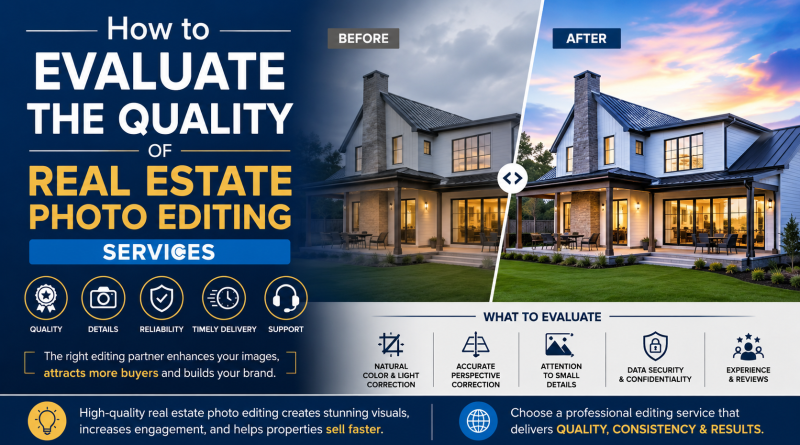
How to Evaluate the Quality of Real Estate Photo Editing Services
Introduction
In today’s competitive real estate market, first impressions are almost always made online. Before a potential buyer schedules a property visit, they have already viewed dozens of listings and formed opinions based on the photographs. High-quality images can encourage buyers to explore a property further, while poorly edited photos can cause them to move on within seconds. This is why professional real estate photo editing has become an essential part of modern property marketing.
However, not every editing company delivers the same level of quality. Some providers focus only on basic color adjustments, while others offer advanced enhancements that transform ordinary property photos into visually appealing marketing assets. Choosing the wrong editing service may result in unrealistic colors, distorted perspectives, delayed delivery, or inconsistent image quality, all of which can negatively affect your brand and property listings.
Whether you are a real estate photographer, realtor, agency, property developer, or vacation rental host, knowing how to evaluate the quality of real estate photo editing services will help you make informed decisions. This guide explains the most important factors to consider, common warning signs, and practical tips for selecting an editing partner that consistently delivers professional results.
Why Quality Photo Editing Matters
Professional editing is much more than making a property image brighter. It improves visual appeal while maintaining a realistic representation of the property. Buyers expect listings to look clean, inviting, and true to life. Proper editing helps achieve that balance.
High-quality editing offers several advantages:
- Creates an excellent first impression
- Highlights important architectural features
- Improves buyer engagement on listing websites
- Builds trust with clients
- Enhances your professional reputation
- Saves photographers valuable editing time
- Helps listings stand out in competitive markets
Properties with professionally edited images often receive more attention because the photos appear polished, balanced, and inviting without looking artificial.
Characteristics of High-Quality Real Estate Photo Editing
When evaluating an editing service, look beyond attractive sample images. Instead, examine whether the editor consistently applies professional editing techniques while preserving the natural appearance of the property.
Natural Color Correction
Color accuracy is one of the clearest indicators of editing quality.
Professional editors carefully adjust:
- White balance
- Brightness
- Contrast
- Saturation
- Highlights
- Shadows
The objective is to create balanced colors that accurately represent the property rather than producing overly vibrant or unrealistic images.
For example, white walls should remain white rather than appearing blue or yellow, and wooden flooring should maintain its natural tone.
Balanced Exposure
Interior real estate photography often includes challenging lighting conditions. Windows may appear too bright while darker areas lose detail.
Experienced editors blend multiple exposures to create photographs where:
- Interior details remain visible
- Outdoor views through windows are preserved
- Lighting appears natural
- No harsh shadows dominate the room
Balanced exposure makes every room feel open, spacious, and welcoming.
Straight Vertical and Horizontal Lines
Perspective correction is essential in architectural photography.
Wide-angle lenses frequently cause walls and buildings to lean inward. Poor editing leaves these distortions visible, making properties appear unstable or unprofessional.
A quality editing service ensures:
- Vertical walls remain straight
- Door frames are aligned
- Buildings look natural
- Room proportions are preserved
Perspective correction greatly improves the overall presentation of both interiors and exteriors.
Clean and Professional Image Composition
Professional editing includes removing small distractions that reduce image quality.
Common corrections include:
- Electrical cords
- Dust spots
- Camera reflections
- Minor floor marks
- Sensor dust
- Small imperfections
Editors should improve the image without removing permanent property features or creating misleading representations.
Realistic Sky Replacement
Cloudy weather can reduce the visual appeal of exterior photographs.
Professional sky replacement should:
- Match the lighting direction
- Blend naturally
- Preserve realistic colors
- Avoid dramatic or artificial skies
An overly saturated sunset added to a cloudy afternoon image can reduce credibility rather than improve it.
Window View Enhancement
Window masking is another feature that separates professional editing companies from average providers.
Instead of white, overexposed windows, skilled editors reveal outdoor scenery while maintaining natural indoor lighting.
Proper window masking creates:
- Better depth
- Higher image quality
- More realistic interiors
- Improved visual balance
Consistency Across Every Image
Consistency is extremely important, especially for photographers delivering hundreds of property images each month.
Evaluate whether every edited image maintains:
- Similar brightness
- Matching color tones
- Consistent contrast
- Uniform editing style
- Equal attention to detail
Inconsistent editing can make an entire property gallery appear unprofessional.
Turnaround Time and Reliability
Fast delivery should never compromise quality.
Many professional editing companies offer turnaround times ranging from 12 to 24 hours, but speed alone is not enough.
When evaluating a provider, ask:
- Do they consistently meet deadlines?
- Can they handle bulk orders?
- Is image quality maintained during busy periods?
- Do they provide updates on project status?
Reliable turnaround allows photographers and real estate professionals to meet tight listing schedules without sacrificing quality.
Image Detail Preservation
One of the biggest mistakes inexperienced editors make is over-processing images.
Signs of excessive editing include:
- Plastic-looking walls
- Loss of texture
- Excessive sharpening
- Heavy noise reduction
- Artificial lighting effects
Professional editing enhances details rather than removing them.
High-quality images should retain:
- Wood grain
- Fabric textures
- Stone surfaces
- Kitchen finishes
- Flooring details
- Architectural elements
These details help buyers better understand the property’s true appearance.
Quality Control Process
A reputable real estate photo editing company follows a structured quality control process before delivering images.
Typical quality checks include:
- Color accuracy review
- Perspective inspection
- Spotting editing errors
- Zoom-level quality inspection
- File naming verification
- Resolution check
Companies with dedicated quality assurance teams are generally more consistent than those relying on a single editor without a review process.
Communication and Customer Support
Excellent editing services combine technical expertise with responsive customer support.
Before committing to a long-term partnership, evaluate how the company communicates.
Questions to consider include:
- Do they respond promptly to inquiries?
- Are revision requests handled professionally?
- Can they accommodate custom editing preferences?
- Do they provide clear pricing and delivery timelines?
Strong communication helps build a reliable working relationship and ensures your editing requirements are consistently met.
Pricing vs. Quality: Finding the Right Balance
Price is often one of the first factors businesses consider when selecting a real estate photo editing company. While it is tempting to choose the lowest-cost provider, pricing alone should never determine your decision. Extremely low rates may indicate limited experience, inconsistent quality, or rushed editing that requires additional revisions later.
Instead of asking, “Who offers the cheapest service?”, ask, “Which company provides the best value for my investment?”
A reliable editing partner should offer:
- Transparent pricing without hidden charges
- Consistent editing quality across every order
- Fast turnaround times
- Responsive customer support
- Secure file handling
- Flexible options for different editing requirements
Paying slightly more for dependable service often results in better client satisfaction, stronger property presentations, and fewer delays.
Evaluate the Portfolio Carefully
A professional portfolio is one of the most valuable resources when comparing editing companies. It demonstrates the editor’s ability to work with different property types, lighting conditions, and editing styles.
When reviewing a portfolio, pay attention to:
Image Consistency
Every image should reflect the same level of editing quality rather than showcasing only a few exceptional examples.
Natural Appearance
Professional editing should enhance images without making them appear artificial or heavily manipulated.
Variety of Properties
A quality portfolio should include:
- Residential homes
- Luxury properties
- Apartments
- Commercial buildings
- Interior photography
- Exterior photography
- Twilight conversions
Before-and-After Examples
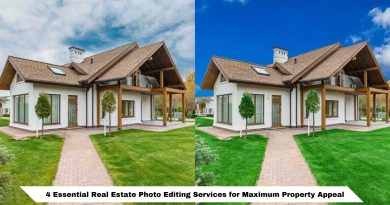
Side-by-side comparisons help you understand the editor’s capabilities. Look for improvements in lighting, color balance, perspective correction, and overall presentation while ensuring the property still appears realistic.
Understand the Revision Policy
Even experienced editors occasionally require adjustments to meet a client’s preferences. A clear revision policy demonstrates professionalism and a commitment to customer satisfaction.
Before placing an order, find out:
- How many revisions are included?
- Is there an additional fee for revisions?
- How quickly are revisions completed?
- What types of changes are covered?
A company that handles revision requests promptly is often easier to work with over the long term.
Data Security and Confidentiality
Real estate photographers and agencies frequently share high-resolution images before properties are officially listed. Protecting these files is essential.
A trustworthy editing company should:
- Handle files securely
- Maintain client confidentiality
- Never reuse or publish client images without permission
- Protect project data during upload and delivery
- Delete files when requested
If privacy is important to your business, ask about the company’s data protection practices before beginning a project.
Warning Signs to Avoid
Not every editing provider delivers professional results. Watch for these common red flags before making your decision.
Extremely Low Prices
Pricing that seems too good to be true may reflect poor editing quality, inexperienced staff, or inconsistent service.
No Sample Work
If a company cannot provide examples of previous projects, it becomes difficult to evaluate its capabilities.
Inconsistent Editing
Images with varying brightness, color tones, or editing styles indicate weak quality control.
Unrealistic Editing
Overly saturated colors, unnatural skies, excessive sharpening, or distorted perspectives can reduce the credibility of your property listings.
Poor Communication
Slow responses, unclear pricing, or difficulty answering questions often signal future service issues.
Missed Deadlines
Late image delivery can delay property listings and affect marketing schedules.
Questions to Ask Before Hiring a Real Estate Photo Editing Company
Asking the right questions helps you identify reliable service providers.
Consider asking:
- How many years of experience do you have in real estate photo editing?
- What editing services do you provide?
- What is your average turnaround time?
- Can you handle bulk image orders?
- Do you offer free sample edits?
- What is your revision policy?
- How do you maintain editing consistency?
- Which software do your editors use?
- How do you protect client files?
- Do you assign a dedicated editor for repeat clients?
Their answers can reveal both technical expertise and customer service standards.
Checklist for Choosing the Best Real Estate Photo Editing Service
Use this checklist when comparing different providers.
✔ Professional portfolio
✔ Natural color correction
✔ Accurate perspective correction
✔ Balanced exposure blending
✔ Consistent editing style
✔ Fast turnaround time
✔ Transparent pricing
✔ Flexible revision policy
✔ Secure file handling
✔ Responsive customer support
✔ Experience with residential and commercial properties
✔ Positive client reviews and testimonials
The more boxes a company can confidently check, the more likely it is to become a reliable long-term editing partner.
Frequently Asked Questions
How can I judge the quality of a real estate photo editing service?
Review their portfolio, request sample edits, evaluate consistency across multiple images, and check client testimonials. Professional editing should enhance images while maintaining a natural appearance.
Is professional editing worth the investment?
Yes. Professionally edited property images can improve online engagement, create stronger first impressions, and help listings attract more potential buyers.
What is a reasonable turnaround time?
Many professional companies deliver edited images within 12 to 24 hours, although larger projects or advanced editing may require additional time.
Should edited property photos look completely different from the originals?
No. Professional editing should improve lighting, color, and composition while accurately representing the property’s actual condition.
Can editing companies handle large projects?
Most established providers can process high-volume orders for photographers, agencies, and real estate businesses while maintaining consistent quality.
Do professional editors provide custom editing styles?
Yes. Many companies can match your preferred editing style, helping maintain consistency across all your property listings.
Final Thoughts
Choosing the right real estate photo editing service is about more than finding the lowest price. It involves evaluating technical expertise, consistency, communication, turnaround time, and the ability to produce natural-looking images that enhance each property’s appeal.
By carefully reviewing portfolios, understanding revision policies, checking data security practices, and asking the right questions, you can confidently select an editing partner that supports your business goals. A dependable editing company not only improves the quality of your property photos but also helps you deliver a more professional experience to your clients.
If you’re looking for experienced editors who specialize in HDR enhancement, perspective correction, sky replacement, object removal, virtual staging, and other professional real estate image enhancements, explore Real Estate Photo Editing Services at https://www.colourcubz.com/real-estate-photo-editing-services to learn more about the available solutions and how they can help elevate your property marketing.